
A height-adjustable desk gives you room to work at more than one height. A chair is still part of the setup if you plan to work seated. The useful question is whether the chair and desk fit together at the positions you actually use.
There is no requirement to stand for a set number of hours to use an adjustable desk. If you work seated, note the chair height that lets you use your keyboard, mouse, and screen comfortably. Then compare that working height with the desk’s published range. A chair that fits you but cannot fit beneath the desk is not a complete solution.
Take measurements with the chair adjusted as you would use it, including the seat, armrests, back, and any foot support. If someone else shares the desk, repeat the check for their position rather than assuming one setting suits both people.
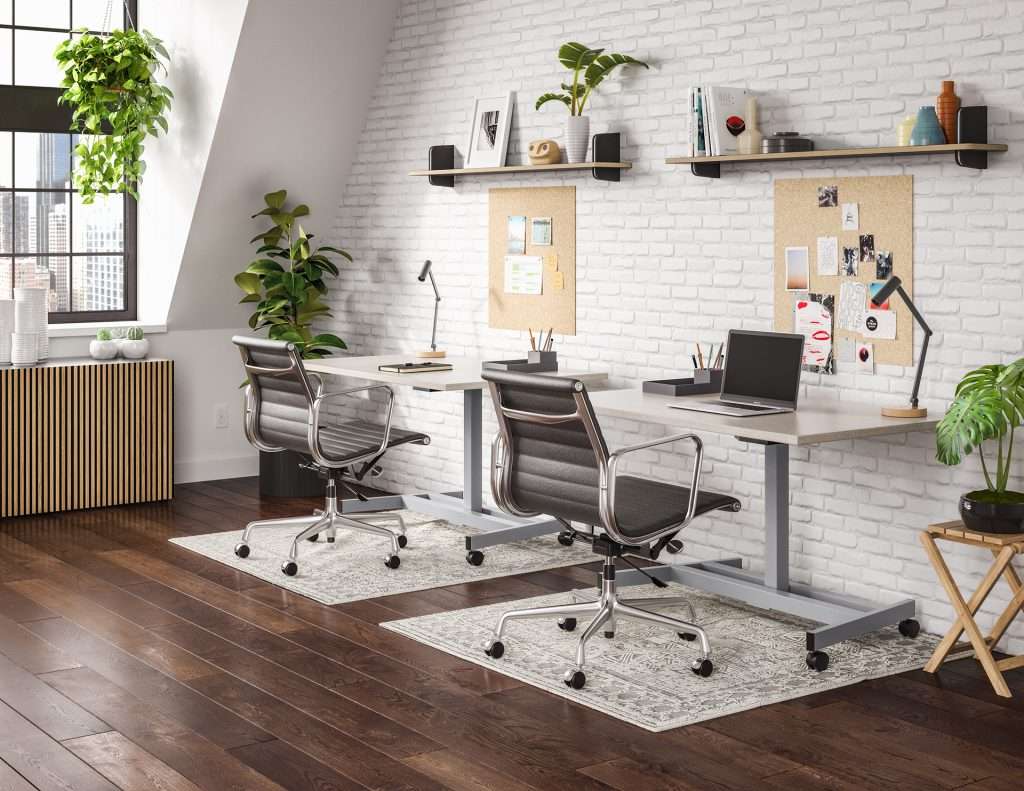
Measure the open space below the work surface at the seated height you need. Check whether the chair can move close enough for your work, whether armrests meet the desktop edge, and whether the frame, feet, or accessories limit legroom. Look at the full workstation, not just the work-surface dimensions.
Floor space matters too. Allow room to roll or move the chair away when changing the desk height. If you use a mat, footrest, monitor arm, or other equipment, include it in your layout and clearance check.
A task chair, stool, or perching seat can each create a different working position. Compare the seat-height range, back and arm support, stability, and how easily you can move the chair in your space. No single chair type is the right match for every person or desk.
Use the chair maker’s actual dimensions and adjustment instructions. A product photo cannot tell you whether the seat, controls, and support will fit your body or the desk. If a specific chair feature is important for a medical or accessibility need, seek advice from a qualified professional who knows your circumstances.
Before buying, compare the desk’s minimum and maximum heights with the chair’s usable seat-height range. Check the dimensions of the exact desk model and work surface you plan to order. Confirm the chair can approach the work surface and move out of the way at other heights.
Compare current desk models for their published dimensions. If a frame or clearance measurement is missing, ask our team about the exact desk configuration. Ask the chair seller for any chair measurements or features you still need.
Keep the chair nearby if you expect to sit during the day, and set the desk to suit the work you are doing. There is no universal sitting-to-standing schedule for every person or task. If you want a simple reminder to review your position, try the standing desk timer and adjust it to your own routine.