
A standing desk converter adds a height-adjustable platform to a desk you already have. It can be useful when the original desk must stay, but the fit depends on the specific converter, the desk beneath it, and the equipment you need to move.
A converter sits on or mounts to an existing desk and raises part of the workstation. Some have separate levels for a screen and keyboard; others use a single platform. The original desk stays at its current height, while the converter carries the items placed on it.
That can be a practical way to add a standing position without replacing a desk. It also means you must assess two products together: the converter and the base desk. Confirm the base desk’s available depth, surface strength, and any rules for mounting hardware before choosing a converter.
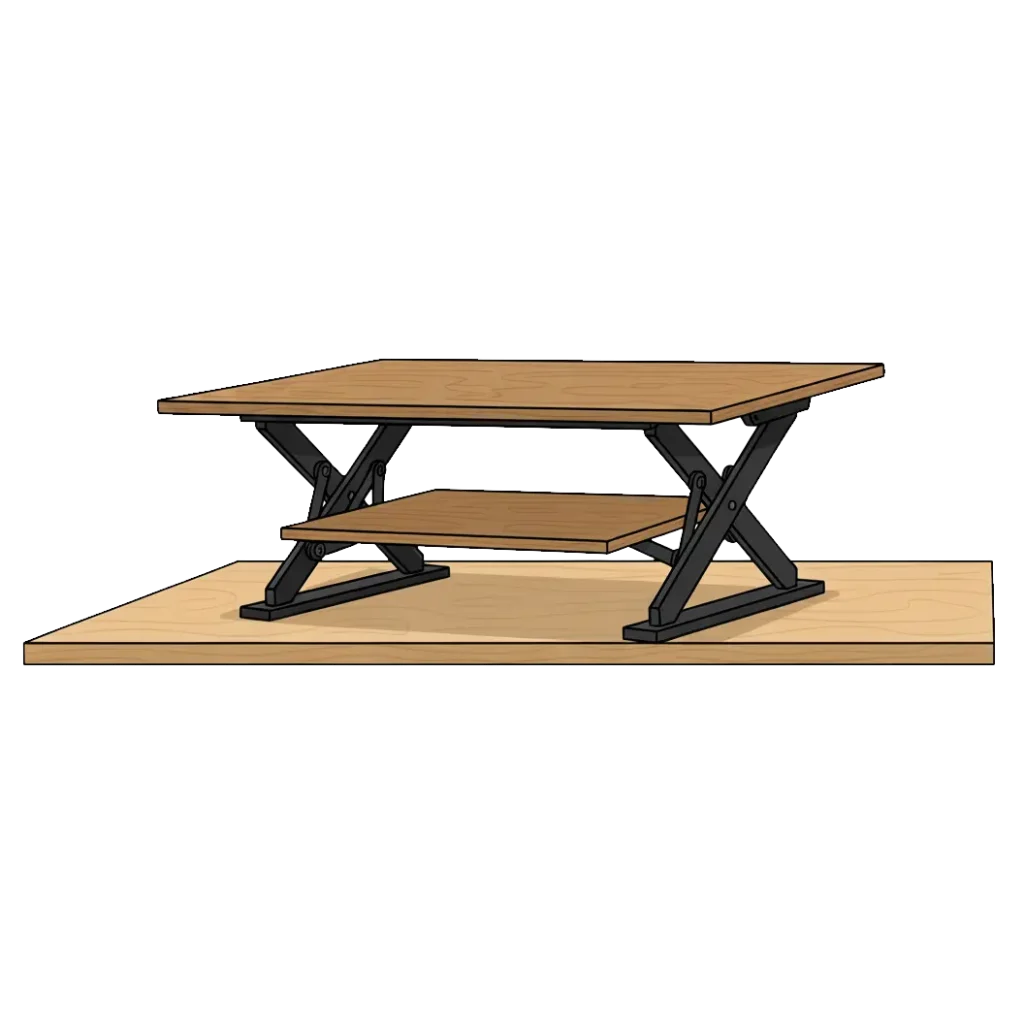
Measure where your keyboard and screen would sit when the converter is fully lowered and at a useful standing height. A converter adds height even when lowered, so the existing desk and chair must still allow a comfortable seated working position. The screen and keyboard may not adjust independently on every model.
Check the manufacturer’s minimum and maximum positions, and whether the lift stops continuously or at set points. If possible, try the intended arrangement with your chair and equipment before buying. A specification sheet can narrow the choice, but it cannot confirm individual fit on its own.
Sketch the footprint of your keyboard, mouse, monitor stands or arms, laptop, and any paper space you use. Compare it with the actual usable area of each converter level. If you use two screens, verify the platform’s load rating and the proposed mounting method for both, including the arm’s clamp requirements.
Also check what remains on the original desk when the platform rises. If you regularly switch between screen work and writing, notice whether both work areas will still be reachable in each position. A full height-adjustable desk moves its whole work surface together; a converter moves only the supported platform.
Converters use different adjustment mechanisms and lift paths. Check how the specific model is raised, lowered, and locked; how far it projects toward you or a wall; and whether you can operate it with your installed equipment. Do not assume all converters wobble, move in the same path, or require the same effort.
Trace power and data cables at both height extremes. Leave enough reach for travel, and keep extra length clear of moving joints. Follow the chosen manufacturer’s guidance on fingers, cords, and mounting; a photograph of another product cannot establish the hazards of the model you buy.
A converter may fit when you need to keep an existing desk or change only part of the workstation. A full adjustable desk may fit when you want the entire work surface to change height together. Neither category guarantees better posture, comfort, stability, or value for every person.
Compare actual models on seated and standing height, usable surface area, equipment rating, adjustment method, cable route, price, and service terms. If a full desk is an option, compare our current desk models and read the complete standing-desk guide. Bring your measurements to our team if you need help checking the fit.